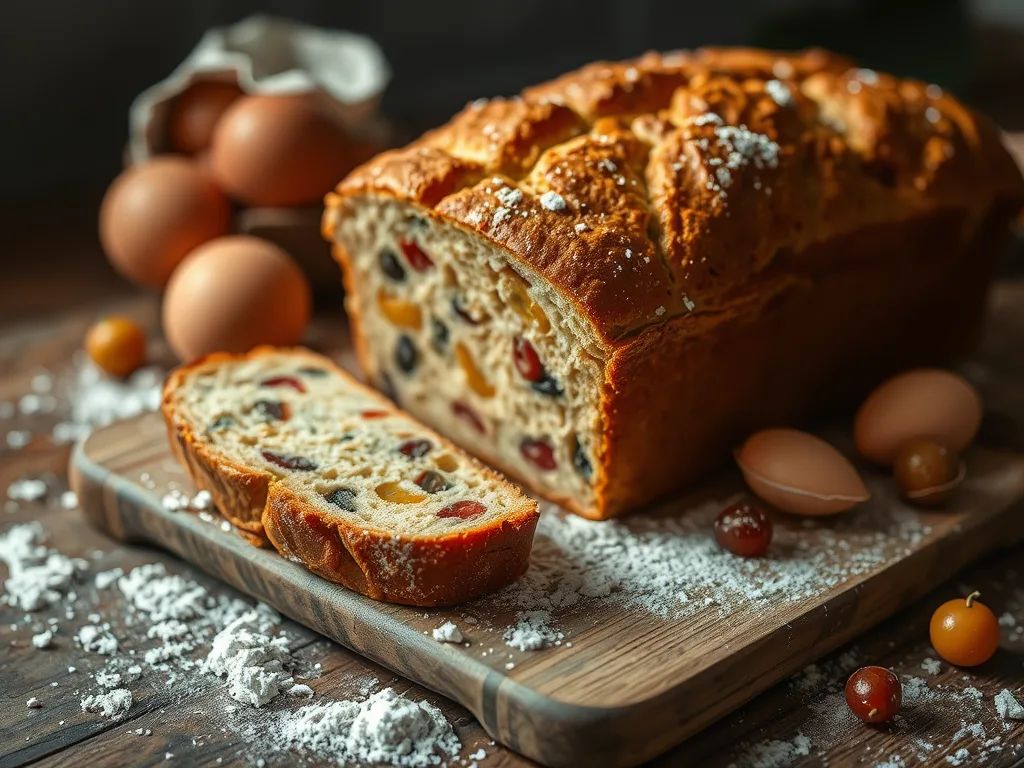
The Story Behind Panettone
Italian Panettone is one of the world's great Christmas breads — a towering, dome-shaped sweet loaf studded with candied fruits and raisins that has become synonymous with the holiday season in Italy and across the Italian diaspora. Its origins are fiercely claimed by Milan, where legend holds that the bread was created in the 15th century. One popular story involves a young nobleman named Ughetto who, to win the hand of a baker's daughter, worked in her father's bakery and invented a luxurious new bread enriched with butter, eggs, sugar, and dried fruits. Another version says the bread was created by a kitchen helper named Toni, giving rise to the phrase "pan de Toni," or Toni’s bread. Whether fact or folklore, these stories reveal how beloved panettone became. A bread this festive almost demands a legend.
By the early 20th century, Milanese bakers Angelo Motta and Gioacchino Alemagna had industrialized panettone production, transforming it from a regional specialty into a national icon. The process of making authentic panettone is extraordinarily complex — requiring a natural yeast, lievito madre, and up to three days of fermentation — which explains why the best ones are still made by skilled artisans. From Chef Ruben’s kitchen, I respect panettone because it is not a rushed recipe. It asks for patience, structure, and trust in the dough. The long fermentation creates flavor and texture that quick breads cannot imitate. The finished loaf should be tall, fragrant, golden, and surprisingly light for something enriched with butter and eggs. When you slice into it and see the fruit suspended in that soft crumb, it feels like Christmas baking at its most generous.
The flavor of panettone is delicate but layered. Butter brings richness, eggs give tenderness and color, citrus peel adds perfume, raisins bring sweetness, and slow fermentation gives the bread its signature depth. The texture should pull apart in soft strands rather than crumble like cake. That is why the dough needs time to develop strength even though it is enriched and tender. The fruit should be distributed evenly, not clumped in one corner. The top should bake golden, and the loaf should cool properly so the structure sets. In Italian homes, panettone is often served in slices with coffee, espresso, sweet wine, or hot chocolate. It can also be toasted with butter, turned into French toast, layered into bread pudding, or served with mascarpone cream. Around Christmas, boxes of panettone become gifts, decorations, and edible symbols of the season.
What I love about panettone is that it carries celebration without needing frosting, glaze, or decoration. The beauty is built into the bread itself. If you are making it at home, give yourself permission to slow down. Warm ingredients gently. Let the dough rise fully. Use good citrus and fruit because those flavors perfume the whole loaf. If your first loaf is not bakery-perfect, it can still be delicious, and it can still teach you something. Panettone is a reminder that holiday baking is as much about time and care as it is about sweetness. It connects Milanese tradition, family gatherings, and the joy of sharing something tall, golden, and fragrant. In every slice, panettone says Christmas has arrived.
There is also a practical side to panettone that I appreciate. Because it is rich but not overly sweet, it can move through the whole holiday day. A slice works for breakfast with coffee, as an afternoon snack, or as dessert after a big meal. Leftovers are never a problem because panettone becomes incredible when toasted. The butter in the dough wakes back up, the fruit gets warm, and the edges become lightly crisp. For home bakers, that means even a loaf that is not perfect can still become something wonderful. Panettone teaches patience, but it also teaches generosity. It is meant to be shared, sliced, passed around, and enjoyed slowly.
Time and Servings:
- Prep Time: 30 minutes
- Cook Time: 45 minutes
- Total Time: 3 hours (including rise time)
- Servings: 10 servings
Nutrition (per serving):
- Calories: 350 kcal
- Protein: 7g
- Fat: 12g
- Carbohydrates: 52g
Ingredients:
- 3 cups all-purpose flour
- 1/2 cup sugar
- 1/2 cup warm milk
- 2 tsp active dry yeast
- 3 eggs
- 1/4 cup unsalted butter, softened
- 1/2 cup mixed dried fruits (raisins, candied orange peel, etc.)
- 1 tsp vanilla extract
- Zest of 1 orange
Instructions:
Activate the Yeast:
- Prepare the Yeast Mixture:
- In a small bowl, dissolve 2 tsp active dry yeast in 1/2 cup of warm milk (about 110°F or 45°C).
- Let it sit for 10 minutes until frothy, indicating the yeast is active.
Make the Dough:
- Combine Ingredients:
- In a large mixing bowl, whisk together 3 cups of flour and 1/2 cup sugar.
- Add the yeast mixture, 3 eggs, 1/4 cup softened butter, 1 tsp vanilla extract, and the zest of 1 orange.
- Knead the Dough:
- Mix until a sticky dough forms. Knead the dough on a lightly floured surface for 8-10 minutes, or until smooth and elastic.
Incorporate Fruits and Proof:
- Add the Dried Fruits:
- Gradually knead in 1/2 cup of mixed dried fruits, ensuring even distribution throughout the dough.
- First Rise:
- Place the dough in a greased bowl, cover with a damp cloth, and let it rise in a warm place for 2 hours, or until doubled in size.
Bake the Panettone:
- Prepare for Baking:
- Preheat your oven to 350°F (175°C). Line a panettone mold or a deep round baking pan with parchment paper.
- Shape the Dough:
- Punch down the risen dough and shape it into a round ball. Place it in the prepared pan or mold.
- Second Rise:
- Cover loosely and let it rise again for 30 minutes, or until the dough reaches the top of the mold.
- Bake:
- Bake for 40-45 minutes, or until the top is golden brown and a toothpick inserted in the center comes out clean.
Cool and Serve:
- Cool the Panettone:
- Allow the bread to cool in the pan for 10 minutes before transferring it to a wire rack to cool completely.
- Serve:
- Slice and serve as a festive treat with coffee, tea, or dessert wine.
Tips for Success:
- Ensure your yeast is fresh and active for a proper rise.
- For added flavor, soak the dried fruits in rum or orange juice before kneading them into the dough.
- If the top browns too quickly while baking, cover it loosely with aluminum foil.
Wine, Cocktail, or Drink Pairing:
- Pair Panettone with a sweet Moscato d’Asti, a robust espresso, or a festive hot toddy for a perfect holiday indulgence.