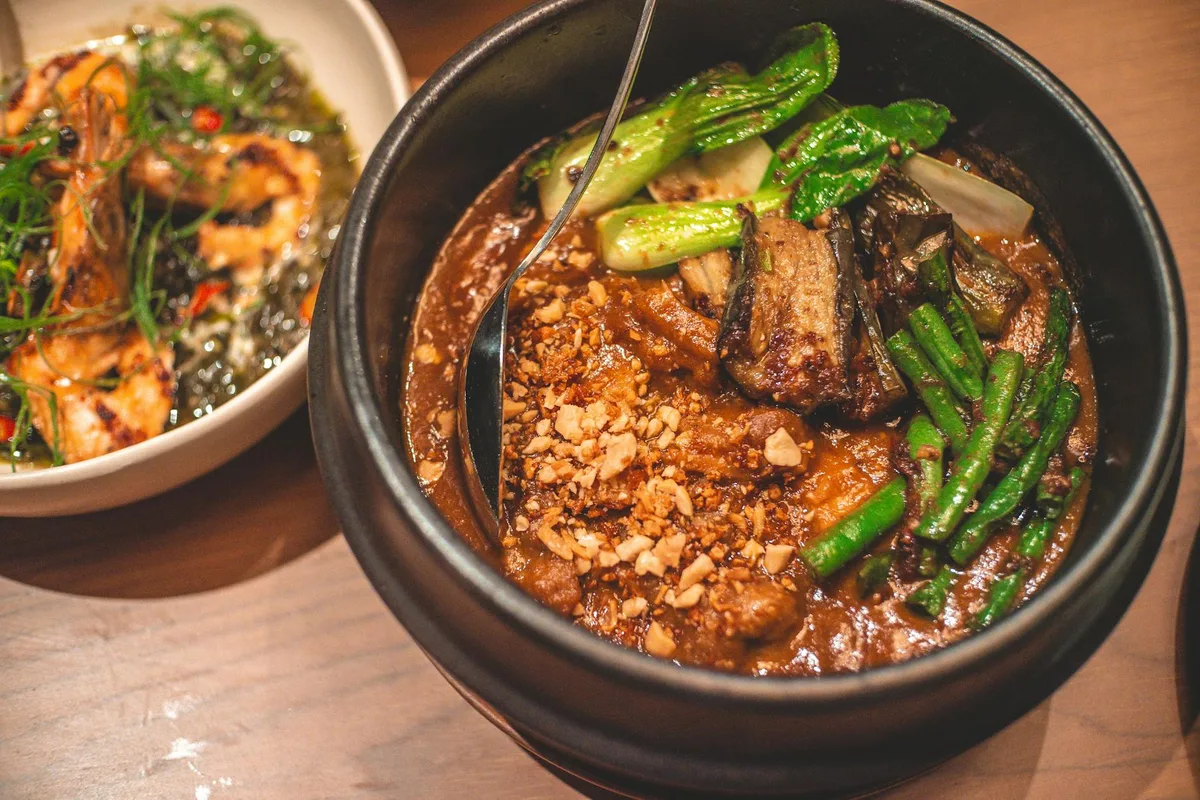
The Story Behind Pancit Canton with Chicken and Vegetables
Pancit, the beloved noodle dish of the Philippines, holds a special place in the hearts and on the tables of Filipinos worldwide. The term "pancit" itself is derived from the Hokkien Chinese phrase "pian e sit," meaning "convenient food," a testament to the dish's roots in Chinese trade and migration centuries ago. As Chinese merchants and laborers settled in the archipelago, they brought with them their culinary traditions, including various noodle preparations. Over generations, these dishes were adapted to local tastes and available ingredients, giving rise to a diverse array of pancit varieties, each with its own unique character and regional flair. Pancit Canton is one of the most popular, characterized by its thick, round egg noodles and hearty mix of meats and vegetables.
What I love about Pancit Canton is how it feels both everyday and celebratory at the same time. It is the kind of dish you can make on a regular weeknight, but when it lands on the table in a big platter, it immediately feels like people should gather around. The technique is fast and lively: aromatics hit the pan, chicken browns, vegetables soften just enough to stay colorful, and the noodles soak up the savory sauce. A good pancit has movement to it — not soupy, not dry, but glossy and well-seasoned, with every noodle carrying flavor.
Pancit Canton, in particular, has become a staple at Filipino celebrations, from birthdays and fiestas to simple family gatherings. It is often served as a symbol of long life and good health, reflecting a tradition common in many Asian cultures where long noodles represent longevity. While the foundational elements of noodles, savory sauce, and mixed ingredients remain consistent, the specific components of Pancit Canton can vary widely. Home cooks and street food vendors alike put their own spin on the dish, incorporating different proteins like pork, shrimp, or a combination, and a medley of seasonal vegetables. This adaptability is part of what makes pancit so enduringly popular, allowing it to be both a comforting everyday meal and a celebratory feast centerpiece.
For many Filipino families, pancit is also a memory food. It shows up at birthdays, holidays, potlucks, and those casual family gatherings where someone always makes enough to feed twice as many people as expected. I appreciate that generosity. Pancit does not want to be precious or tiny. It wants to be shared, passed around, reheated, packed up, and enjoyed again later. The vegetables bring color and crunch, the chicken makes it satisfying, and a squeeze of calamansi or lemon at the end wakes everything up beautifully.
More than just a dish, Pancit Canton embodies the rich cultural tapestry of the Philippines, blending indigenous flavors with Chinese culinary influences. It is a testament to the country's history of trade, migration, and the beautiful fusion of cultures that resulted. Preparing Pancit Canton at home is not just about cooking a meal; it is about connecting with this vibrant culinary heritage. The process of stir-frying fresh ingredients, the aroma of garlic and soy sauce filling the kitchen, and the joyful act of sharing a generous platter of noodles with loved ones make it a truly heartwarming experience, bringing a taste of Filipino warmth and hospitality to any table.
Time and Servings:
- Prep Time: 20 minutes
- Cook Time: 25 minutes
- Total Time: 45 minutes
- Servings: 6
Nutrition (per serving):
Calories: 480 kcal | Carbohydrates: 60g | Protein: 35g | Fat: 15g
Ingredients
- 8 ounces pancit canton noodles (or dried egg noodles)
- 1 tablespoon vegetable oil, plus more for cooking
- 1 pound boneless, skinless chicken breast, cut into thin strips
- 4 cloves garlic, minced
- 1 medium yellow onion, thinly sliced
- 1 cup carrots, julienned
- 2 cups green cabbage, thinly sliced
- 1 cup snow peas, trimmed
- 1 red bell pepper, thinly sliced
- 1/2 cup chicken broth
- 1/4 cup soy sauce
- 2 tablespoons oyster sauce
- 1 tablespoon brown sugar
- 1/2 teaspoon black pepper
- 2 green onions, sliced, for garnish
- Lime wedges, for serving
Instructions
- Prepare Noodles
Cook pancit canton noodles according to package directions until al dente. Drain, rinse with cold water to prevent sticking, and set aside. Toss lightly with 1 tablespoon of vegetable oil. - Cook Chicken
Heat 1 tablespoon of vegetable oil in a large wok or skillet over medium-high heat. Add chicken strips and cook until browned and cooked through, about 5-7 minutes. Remove chicken from the wok and set aside. - Sauté Aromatics
Add a little more oil to the wok if needed. Add minced garlic and sliced onion, cooking until fragrant and softened, about 2-3 minutes. - Add Vegetables
Stir in the julienned carrots, sliced cabbage, snow peas, and red bell pepper. Cook for 3-5 minutes, stirring frequently, until vegetables are crisp-tender. - Make the Sauce
In a small bowl, whisk together the chicken broth, soy sauce, oyster sauce, brown sugar, and black pepper. - Combine Everything
Return the cooked chicken to the wok with the vegetables. Pour the sauce over everything and bring to a simmer. Add the cooked noodles to the wok and toss gently to coat all ingredients evenly with the sauce. - Finish and Serve
Continue to cook for another 2-3 minutes, allowing the noodles to absorb the sauce. Garnish with sliced green onions and serve immediately with lime wedges on the side.
Tips for Success:
- Perfect Noodle Texture: Do not overcook the noodles; they should be slightly undercooked (al dente) before adding to the wok, as they will finish cooking in the sauce.
- Vegetable Prep: Slice all vegetables uniformly and thinly to ensure they cook evenly and quickly in the hot wok, maintaining a crisp-tender texture.
- High Heat Stir-Frying: Use high heat when stir-frying to achieve a slight char on the ingredients and prevent the vegetables from becoming soggy.
- Flavor Boost: A squeeze of fresh lime or calamansi juice right before serving brightens the flavors and adds a characteristic tang.
Drink Pairing:
- A cold, crisp lager or pilsner perfectly complements the savory and slightly sweet notes of the pancit.
- For a non-alcoholic option, a refreshing glass of iced tea or calamansi juice would be delightful.
- Consider a light-bodied white wine, such as a Sauvignon Blanc or Pinot Grigio, to balance the richness of the dish.