The Story Behind Sugo al Pomodoro Italian Tomato Sauce
Sugo al Pomodoro — Italian tomato sauce — seems like it must be ancient, but the story of tomatoes in Italy is surprisingly recent. The tomato arrived in Europe from the Americas following Spanish colonization in the 16th century, but Italians were initially suspicious of the new fruit, fearing it was poisonous. It wasn’t until the late 18th century that tomatoes became widely embraced in Italian cooking — first in the south, then spreading north. The first recorded recipe for pasta with tomato sauce appeared in Naples in 1790.
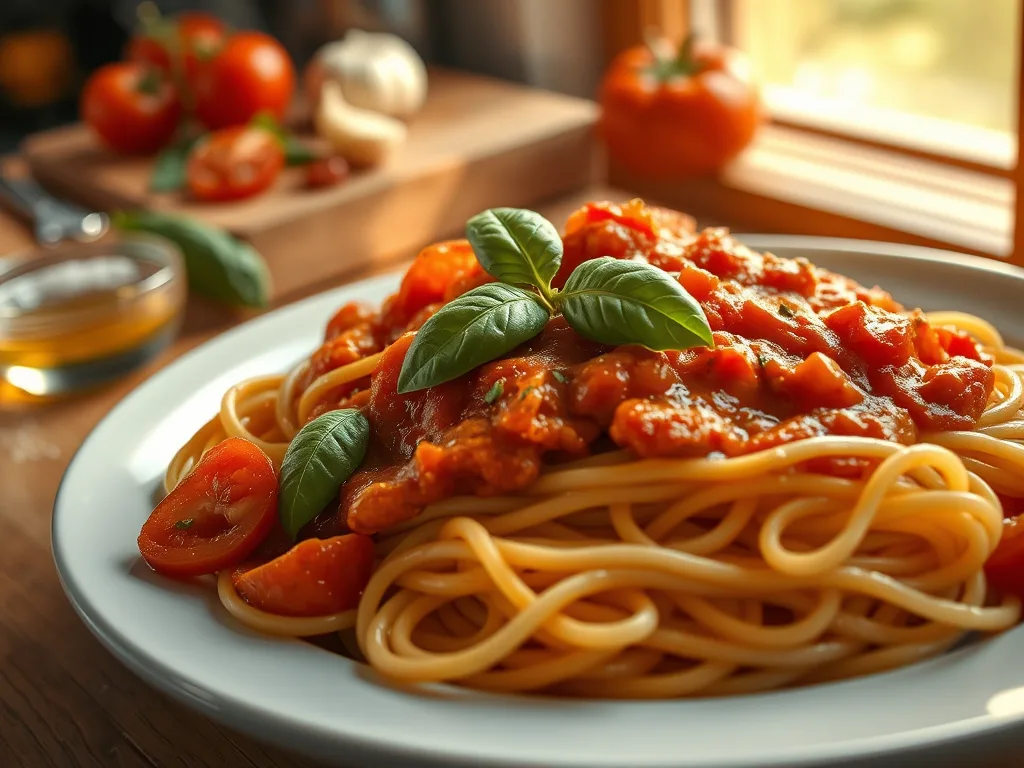
Within a century, “il pomodoro” had become the foundation of Italian cuisine as the world knows it. The beauty of Sugo al Pomodoro lies in its simplicity: high-quality tomatoes, olive oil, garlic, and basil, cooked slowly to develop a depth of flavor that no shortcut can replicate. It is proof that the most revolutionary ingredients often produce the most enduring recipes.
I spent a week in Naples years ago eating at as many different trattorias as I could, and the lesson I came back with was this: the tomatoes are everything. Not the technique, not the ratio of garlic to oil, not the particular way you tear the basil. The tomatoes. San Marzano tomatoes — grown in the volcanic soil of Campania in the shadow of Vesuvius — have a sweetness, low acidity, and meaty density that no other variety comes close to matching for sauce. Look for “DOP” on the label, which certifies they were actually grown in that specific region. The other revelation from that trip was how little olive oil you need to hold back and how much you should use confidently — a generous pour at the beginning to bloom the garlic, and another drizzle at the very end, off the heat, to finish the sauce with fresh, grassy fragrance. That final addition is called a “filo d’olio” — a thread of oil — and it is one of the quiet secrets of Italian cooking. This sauce takes twenty-five minutes from pantry to table. Make a big batch on Sunday and eat well all week.
The basil question divides serious Italian cooks: do you add it at the beginning or the end? I add it both times. A couple of whole basil sprigs go in at the start of simmering — their stems and slightly tougher leaves release a deeper, more cooked herbaceous flavor into the sauce. Then I remove those spent sprigs and tear in a fresh handful of tender leaves right at the end, off the heat, so their bright, volatile fragrance remains vivid. This layered approach gives you both depth and brightness in the same pot. Store extra sauce in glass jars in the freezer; a jar of homemade sugo in the freezer is one of the most reassuring things you can have in a kitchen.
Time and Servings
- Prep Time: 5 minutes
- Cook Time: 20 minutes
- Total Time: 25 minutes
- Servings: 4 servings
Nutrition (per serving)
- Calories: 120 kcal
- Fat: 10g
- Carbohydrates: 8g
- Protein: 1g
Ingredients
- 4 large ripe tomatoes, chopped (or use canned whole peeled tomatoes for convenience)
- 2 cloves garlic, finely minced
- 1/4 cup extra-virgin olive oil
- Salt and freshly ground black pepper, to taste
- Fresh basil leaves (for garnish)
Instructions
1. Prepare the Tomatoes
- If using fresh tomatoes, blanch them in boiling water for 30 seconds, then transfer to an ice bath. Peel off the skins and chop finely. Alternatively, use high-quality canned tomatoes for a faster preparation.
2. Sauté the Garlic
- Heat the olive oil in a large skillet over medium heat.
- Add the minced garlic and sauté gently for 1-2 minutes, stirring constantly, until it turns golden and fragrant. Be careful not to burn it.
3. Cook the Tomatoes
- Add the prepared tomatoes to the skillet. Stir well to combine with the garlic and oil.
- Reduce the heat to low and simmer for 15-20 minutes, stirring occasionally, until the sauce thickens and the flavors meld together. Use the back of a spoon to gently crush the tomatoes for a smoother consistency.
4. Season and Garnish
- Season the sauce with salt and pepper to taste.
- Tear fresh basil leaves and stir them into the sauce just before serving for a burst of flavor.
5. Serve
- Serve hot over your favorite pasta, such as spaghetti or penne. Alternatively, use it as a base for pizza or other Italian dishes.
Tips for Success
- Tomato Selection: Use fresh, ripe tomatoes like San Marzano for the best flavor. If fresh tomatoes aren’t available, choose high-quality canned tomatoes labeled “DOP.”
- Perfect Garlic Sauté: Garlic burns quickly, so keep the heat moderate and stir continuously to avoid a bitter taste.
- Consistency Control: For a smoother sauce, use an immersion blender to puree the mixture after simmering. Leave it chunky for a rustic touch.
- Balancing Acidity: If the tomatoes are too acidic, add a pinch of sugar to balance the flavors.
- Enhance the Flavor: For an extra depth of flavor, add a splash of white wine to the skillet before adding the tomatoes and let it reduce.
- Storage Tip: This sauce can be made ahead and stored in the refrigerator for up to 3 days or frozen for up to 3 months.
Wine, Cocktail, or Drink Pairing:
Wine Pairing:
A Chianti or Montepulciano d’Abruzzo is an excellent choice. The bright acidity and earthy flavors of these red wines balance beautifully with the tangy tomato sauce and enhance the simple, classic Italian flavors.
Cocktail Pairing:
A Negroni offers a slightly bitter and citrusy profile that complements the richness of the tomato sauce while cleansing the palate between bites.
Non-Alcoholic Option:
A sparkling water with a twist of lemon is refreshing and helps cut through the natural acidity of the tomato sauce, keeping the meal light and enjoyable.