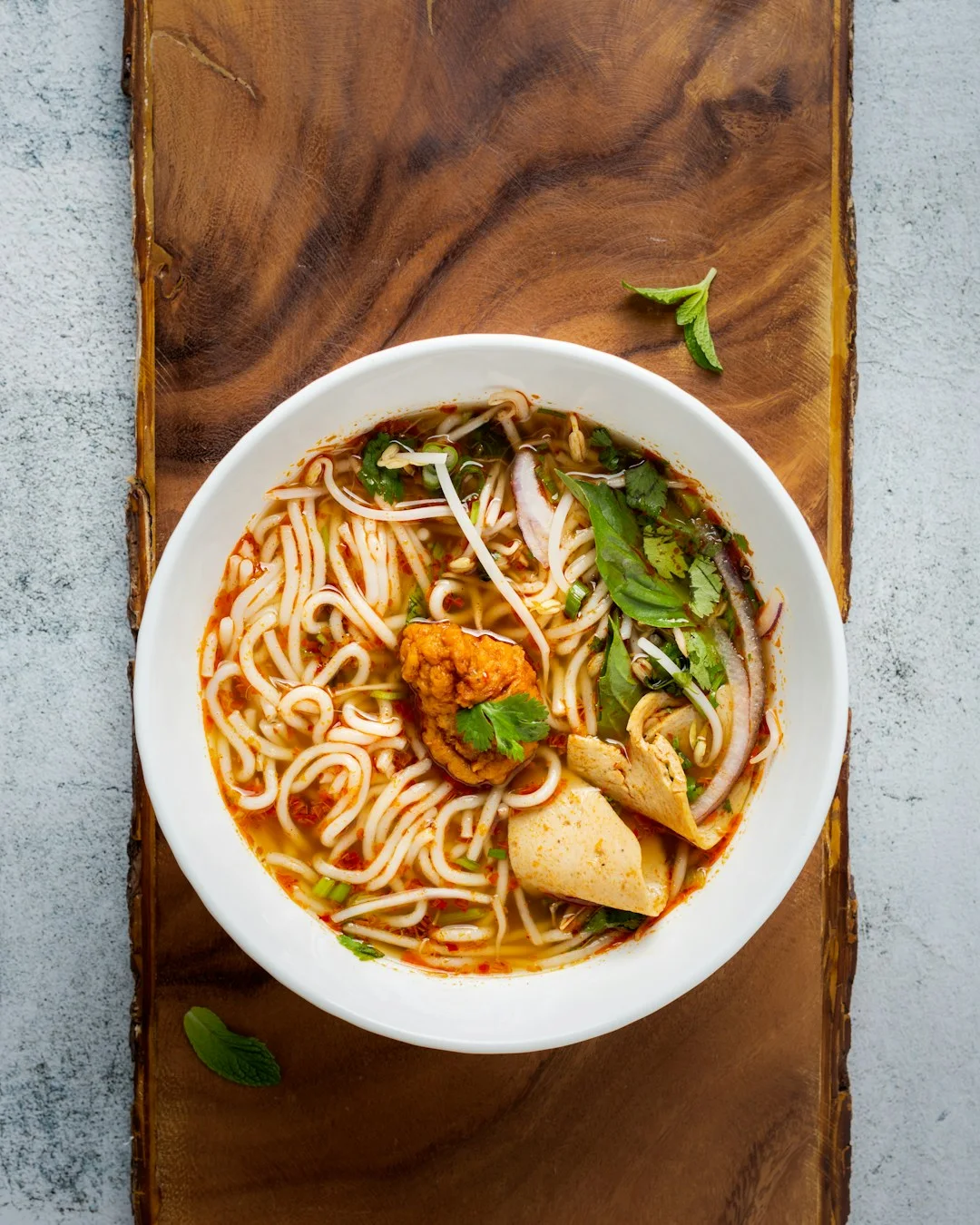
The Story Behind Singaporean Laksa
Laksa is perhaps the most eloquent expression of the Peranakan — or Nyonya — culinary tradition: a cuisine born from the intermarriage of Chinese immigrant men and local Malay women in the Straits Settlements of the 18th and 19th centuries. The word "laksa" likely derives from Sanskrit, and variants of the dish are found across maritime Southeast Asia — in Malaysia, Indonesia, and even as far as Myanmar — but Singapore's Katong Laksa has become the globally recognised avatar of the style. It is a heady soup of thick rice noodles submerged in a rich, golden coconut-milk broth built on a rempah (spice paste) of dried chilies, shrimp paste, lemongrass, galangal, and turmeric, topped with plump prawns, fish cake, bean sprouts, and hard-boiled egg.
What distinguishes Singapore Laksa from its Malaysian cousins is not any single ingredient but the particular balance of its flavours — assertively spicy, deeply savoury from belacan, creamy from coconut milk, and brightened by coriander — and the tradition of serving it with noodles already cut into short segments so the whole bowl can be eaten with a spoon alone. In Singapore, the Katong district is the epicentre of Laksa culture, with rival stalls that have been competing for supremacy for generations, each claiming secret rempah recipes handed down through family lines. Making a proper laksa paste from scratch — blending and frying it until the oil separates and the kitchen fills with intoxicating fragrance — is one of the great pleasures of Southeast Asian cooking.
What I love about laksa is that it does not whisper. It announces itself with fragrance before the bowl ever reaches the table. The rempah is the heart of the dish, and frying it properly is what separates a flat soup from a deep, layered broth. The raw edge of the chilies softens, the shrimp paste becomes savory instead of sharp, the lemongrass and galangal release their perfume, and the coconut milk rounds everything into something rich and comforting.
At the table, laksa is all about abundance. The noodles are slippery, the broth is creamy and spicy, the prawns bring sweetness, the fish cake adds bounce, and the bean sprouts keep a little crunch. A spoonful can carry heat, seafood, coconut, herbs, and noodle all at once. As Chef Ruben, I think this is one of those dishes that shows how cultural blending can create something more powerful than any single influence alone. Laksa tastes like migration, adaptation, family recipes, hawker stalls, and the joy of a bowl that refuses to be boring.
Time and Servings:
- Prep Time: 20 minutes
- Cook Time: 30 minutes
- Total Time: 50 minutes
- Servings: 4
Nutrition (per serving):
- Calories: 560 kcal
- Protein: 28g
- Fat: 28g
- Carbohydrates: 50g
- Fiber: 3g
- Sugar: 6g
- Sodium: 1200mg
Ingredients:
- For the Laksa Paste:
- 6 dried red chilies, soaked and drained
- 4 fresh red chilies
- 6 shallots, peeled
- 4 cloves garlic
- 1 stalk lemongrass, white part only
- 1 inch galangal, peeled
- 1 inch fresh turmeric or 1 tsp ground turmeric
- 1 tsp belacan (shrimp paste), toasted
- 1 tsp ground coriander
- 2 tbsp neutral oil
- For the Broth:
- 400ml (1 can) full-fat coconut milk
- 600ml chicken or prawn stock
- 2 tbsp fish sauce
- 1 tsp sugar
- Salt to taste
- For Noodles and Toppings:
- 300g thick rice vermicelli or laksa noodles, cooked per package
- 200g medium shrimp, peeled and cooked
- 150g fish tofu or fish balls, halved
- 100g bean sprouts, briefly blanched
- 2 hard-boiled eggs, halved
- Fresh coriander and sliced spring onion to garnish
- Sambal belacan to serve on the side
Instructions:
- Make the Laksa Paste:
- Blend soaked dried chilies, fresh chilies, shallots, garlic, lemongrass, galangal, turmeric, toasted belacan, and ground coriander with the oil into a smooth, fragrant paste.
- Fry the Paste:
- Heat 2 tbsp oil in a large heavy pot over medium heat. Add the laksa paste and fry, stirring constantly, for 8–10 minutes until deeply fragrant and the oil begins to separate and pool around the edges of the paste.
- Build the Broth:
- Pour in coconut milk and stock. Stir well to combine with the paste. Bring to a gentle simmer — do not boil rapidly or the coconut milk will split and become grainy.
- Season with fish sauce, sugar, and salt. Simmer for 15 minutes to meld flavours.
- Prepare Toppings:
- Poach shrimp in the simmering broth until just pink, then remove. Halve fish tofu or fish balls. Briefly blanch bean sprouts in boiling water and drain.
- Assemble and Serve:
- Divide cooked noodles into deep bowls. Ladle the hot laksa broth generously over the noodles.
- Arrange shrimp, fish tofu, bean sprouts, and egg halves on top. Garnish with coriander and spring onion. Serve with sambal belacan on the side.
Tips for Success:
- Toast the Belacan: Wrap shrimp paste in foil and dry-toast in a pan for 1–2 minutes per side before blending — this deepens the flavor significantly.
- Fry the Paste Long Enough: Rushing this step leaves raw, harsh flavors. Fry until the oil separates — that is your signal the paste is ready.
- Shortcut Option: Good-quality store-bought laksa paste (Prima Taste or Fairprice brands) produces excellent results when time is short.
- Broth Consistency: For a richer broth, add a second can of coconut milk. For a lighter version, use more stock.
Wine, Cocktail, or Drink Pairing:
- Laksa's boldness pairs well with an off-dry Gewürztraminer, a cold coconut water, or a refreshing glass of barley water — a classic Singaporean hawker centre pairing.