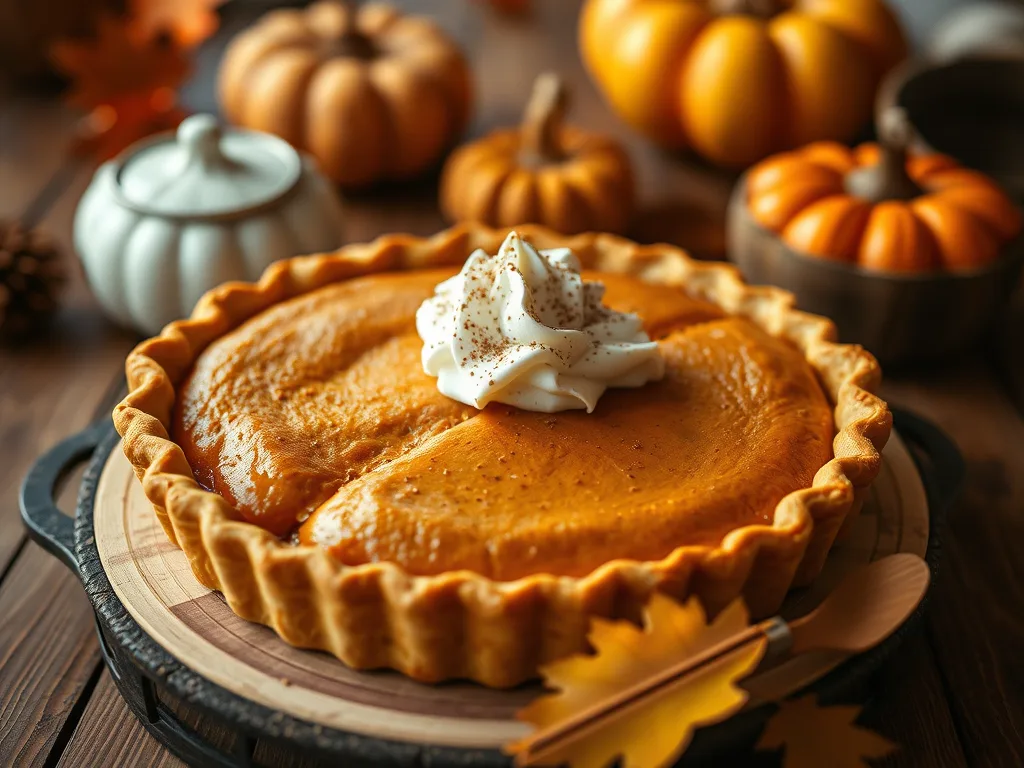
The Story Behind Pumpkin Pie
Pumpkin Pie is perhaps the most symbolically American dessert — a dish that connects the modern Thanksgiving table to the very first harvest celebrations in the New World. Pumpkins, a type of squash, are native to North America and have been cultivated by indigenous peoples for over 7,500 years. The Pilgrims encountered pumpkins upon arriving in New England, where the Wampanoag had been growing and preparing them for centuries. Long before pumpkin became a pie filling or a seasonal coffee flavor, it was a vital food: nourishing, versatile, storable, and deeply connected to the land. That history gives pumpkin pie more meaning than most desserts. It is not just sweet custard in a crust. It is an edible symbol of harvest, survival, adaptation, and memory.
Early colonial records describe pumpkins sweetened with molasses and baked in their shells in the embers of a fire — a predecessor of the spiced custard pie we know today. By the time pumpkin pie appeared in early American cookbooks in the late 18th century, it was already embedded in the Thanksgiving tradition. The spice blend — cinnamon, ginger, cloves, and nutmeg — is now so synonymous with autumn that it has become the defining scent of the entire season, spawning an industry of pumpkin spice products that would bewilder and perhaps delight the Pilgrims. From Chef Ruben’s kitchen, I love pumpkin pie because it is one of those desserts people expect, but still judge carefully. Everyone has an opinion: more spice, less spice, firmer filling, silkier filling, homemade crust, whipped cream, no whipped cream. That is how you know a dish matters.
The technique behind a great pumpkin pie is about smoothness and balance. Pumpkin purée brings earthiness and body, but it needs eggs and dairy to become custard. Evaporated milk, cream, or condensed milk can all create different textures and sweetness levels. The spices should warm the filling without making it harsh, and a little salt is essential because it brings the pumpkin flavor forward. The crust matters too. A flaky, buttery crust gives contrast to the soft filling, but it may need blind baking or chilling to prevent sogginess. The pie should be baked until the edges are set and the center still has a slight wobble, because it will continue to firm as it cools. Overbaking can cause cracks, though honestly, whipped cream has saved many pies from visual judgment. Pumpkin pie is also a dessert of anticipation. It is usually made ahead, chilled, and brought out after a meal that already feels abundant. Somehow, people still make room for it. Maybe that is because pumpkin pie tastes like tradition more than indulgence. It is familiar, spiced, creamy, and humble. On Thanksgiving, it reminds us that the harvest table is not only about food — it is about gratitude, history, and the recipes that keep returning year after year.
Time and Servings:
- Prep Time: 20 minutes
- Cook Time: 50 minutes
- Total Time: 1 hour 10 minutes
- Servings: 8 servings
Nutrition (per serving):
- Calories: 300 kcal
- Protein: 5g
- Fat: 14g
- Carbohydrates: 40g
Ingredients:
- 1 pie crust (homemade or store-bought)
- 1 can (15 oz) pumpkin purée
- 1/2 cup brown sugar
- 1/2 cup heavy cream
- 2 eggs
- 1 tsp ground cinnamon
- 1/2 tsp ground ginger
- 1/4 tsp ground nutmeg
- Whipped cream, for topping
Instructions:
- Prepare the Pie Crust:
- Preheat your oven to 350°F (175°C).
- Roll out the pie crust and fit it into a 9-inch pie dish.
- Trim and crimp the edges, then set aside.
- Make the Pumpkin Filling:
- In a large mixing bowl, combine 1 can (15 oz) of pumpkin purée, 1/2 cup of brown sugar, 1/2 cup of heavy cream, and 2 eggs.
- Add 1 tsp of ground cinnamon, 1/2 tsp of ground ginger, and 1/4 tsp of ground nutmeg.
- Whisk until the mixture is smooth and well combined.
- Assemble and Bake the Pie:
- Pour the pumpkin filling into the prepared pie crust, spreading it evenly.
- Place the pie on the center rack of the preheated oven and bake for 50 minutes, or until the filling is set and a toothpick inserted near the center comes out clean.
- If the crust edges begin to brown too quickly, cover them with aluminum foil or a pie shield during baking.
- Cool and Serve:
- Remove the pie from the oven and allow it to cool completely at room temperature, about 2 hours.
- Slice and serve topped with whipped cream for a classic Thanksgiving dessert.
Tips for Success
- Blind Bake Crust: For a perfectly crisp bottom crust, blind bake it until lightly golden before adding the pumpkin filling to prevent sogginess.
- Prevent Cracks: Bake until the pie's edges are set but the center still jiggles slightly, then cool completely to prevent surface cracks.
- Spice Swap: If you lack individual spices, substitute 1 1/2 teaspoons of pre-mixed pumpkin pie spice for convenience and consistent flavor.
- Proper Storage: Cover leftover pumpkin pie loosely with plastic wrap and refrigerate for up to 3-4 days to maintain freshness and safety.
- Cool Completely: Allow the pie to cool on a wire rack for at least 2-3 hours, or ideally overnight, before slicing to ensure it sets properly.
Wine, Cocktail, or Drink Pairing:
- Pair this pumpkin pie with a warm spiced apple cider, a glass of dessert wine like Sauternes, or a festive pumpkin spice latte.