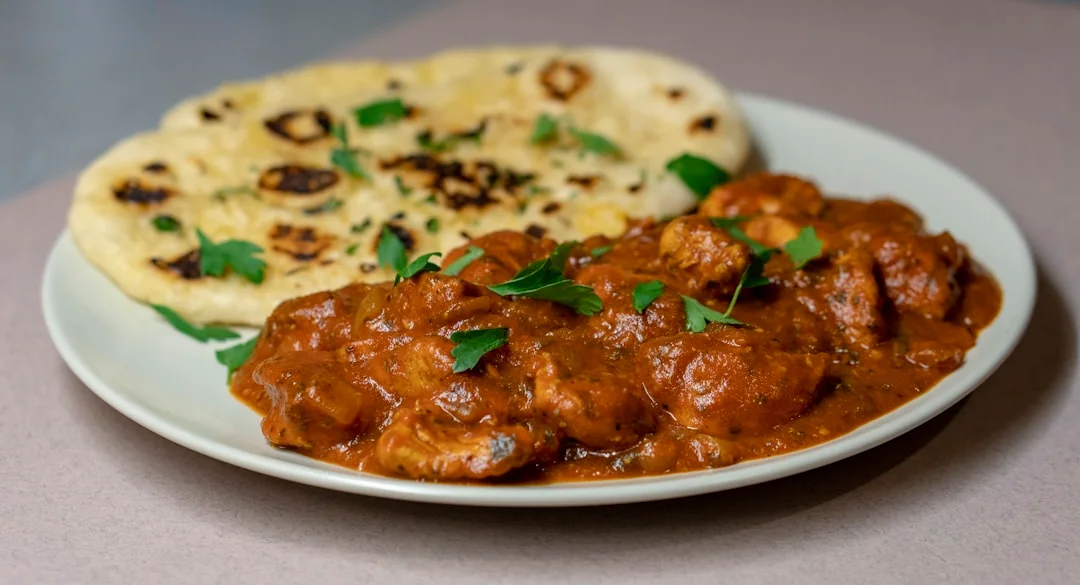
The Story Behind Singaporean Roti Prata
Roti Prata — known in India and Malaysia as Roti Canai — is one of the most universally beloved breakfast foods in Singapore, a dish whose origins lie in the Tamil Muslim (Mamak) community of South Indian traders and laborers who settled in Singapore in the 19th century. The word "prata" derives from the Hindi "paratha," and like the paratha it is a flatbread made from a laminated, oil-enriched dough that is stretched, folded, and cooked on a hot griddle — but Singapore's prata masters have elevated the technique to a performance art. The theatrical flipping, tossing, and slapping of the dough that skilled prata-men perform at their stalls draws crowds and inspires awe, the result of years of practice producing a bread of extraordinary crispiness and flakiness that somehow also retains a soft, chewy interior.
In Singapore, Roti Prata is eaten at any time of day but is most beloved as a breakfast or late-night supper (Singapore's hawker centres never truly close), typically served with fish curry or dal alongside. The condiments and accompaniments have multiplied over the decades: egg prata (with a whole egg cracked inside), coin prata (small discs made for the technique of throwing into the air), tissue prata (stretched to near-transparency and built into a tall, crispy cone), and an ever-growing list of sweet and savoury fillings from banana to cheese to sardines. But the classic plain prata with a bowl of curry for dipping remains the gold standard — simple, perfect, and deeply satisfying.
What I love about prata is that it is both bread and spectacle. The dough looks ordinary at first, but after resting, stretching, oiling, folding, and griddling, it becomes something layered and alive. The outside crisps, the inside stays tender, and each torn piece has little flaky pockets ready to catch curry. That texture does not happen by accident. Resting the dough allows it to stretch without tearing, and cooking it on a hot surface gives the bread those browned, blistered spots that make it irresistible.
As Chef Ruben, I think this is one of those foods that proves simple ingredients can become extraordinary with technique. Flour, water, fat, and salt do not sound dramatic, but in skilled hands they become a breakfast people line up for. At home, even if you do not toss the dough like a hawker master, you can still capture the spirit: crispy edges, soft layers, and a warm bowl of curry or dal for dipping. Roti Prata is humble, fun, and deeply comforting — the kind of food that makes you tear off one more piece even after you said you were done.
Time and Servings:
- Prep Time: 20 minutes (plus 1 hour resting)
- Cook Time: 20 minutes
- Total Time: 40 minutes active
- Servings: 6 pratas
Nutrition (per prata, without curry):
- Calories: 220 kcal
- Protein: 4g
- Fat: 9g
- Carbohydrates: 30g
- Fiber: 1g
- Sugar: 2g
- Sodium: 180mg
Ingredients:
- For the Dough:
- 2 cups all-purpose flour
- 1/2 tsp salt
- 1/2 tsp sugar
- 2 tbsp condensed milk
- 3/4 cup warm water (add gradually)
- 2 tbsp neutral oil or ghee
- For Layering and Cooking:
- 4 tbsp ghee or clarified butter, softened
- Extra ghee or oil for the griddle
- For Serving:
- Mutton or chicken curry (or dal curry for a vegetarian option)
- Optional: 1 egg per prata for egg prata
Instructions:
- Make the Dough:
- Combine flour, salt, sugar, and condensed milk in a large bowl. Add warm water gradually, mixing until a soft, slightly sticky dough forms.
- Add oil and knead for 8–10 minutes until the dough is smooth, elastic, and no longer sticky.
- Divide into 6 equal balls. Coat each generously in oil, place on a greased plate or tray, cover with plastic wrap, and rest for at least 1 hour (or up to overnight in the fridge).
- Stretch the Dough:
- On an oiled work surface, flatten a dough ball with your palm. Using your fingers and the backs of your hands, stretch the dough outward in all directions as thin as possible — ideally nearly translucent — without tearing.
- Spread a thin layer of softened ghee over the stretched dough.
- Fold into Layers:
- Fold the stretched dough into layers: fold one edge to the centre, then the opposite edge over it (like a letter), then fold again in the perpendicular direction to form a layered square or circle. These layers create the signature flakiness.
- Cook:
- Heat a flat griddle or heavy skillet over medium-high heat. Grease lightly with ghee or oil.
- Flatten each folded prata slightly and cook for 2–3 minutes per side, pressing down occasionally with a spatula, until both sides are golden-brown and crispy.
- For egg prata: crack an egg on the hot griddle, place the stretched (pre-folded) dough over it, press to stick, and flip to cook the other side.
- Fluff and Serve:
- Remove from heat and clap the hot prata between your palms several times — this separates the layers and creates the characteristic airy, flaky texture.
- Serve immediately with a bowl of warm curry for dipping.
Tips for Success:
- Rest the Dough: The long resting time is essential for gluten to relax so the dough can be stretched thin without snapping back.
- Oil Everything: Generous oil at every stage — in the dough, on the surface, on the dough while stretching, on the griddle — is the key to the layers and the crispy texture.
- Ghee Over Oil: Using ghee (clarified butter) for layering adds the characteristic rich, slightly nutty flavour of authentic prata.
- Clap After Cooking: Don't skip the clapping step — it physically separates the layers and transforms a flat piece of fried bread into a light, flaky prata.
Wine, Cocktail, or Drink Pairing:
- Roti Prata is most authentically paired with teh tarik (sweet pulled milk tea) or a strong kopi (Singapore coffee with sweetened condensed milk). The richness of the ghee-layered bread is beautifully cut by a malty, sweet tea.